
Compatibility-first smart thermostat reviews
A smart thermostat is not just an app on the wall. The right one has to fit your HVAC wiring, C-wire situation, heat pump setup, household habits, Wi-Fi, and voice-assistant platform. If those pieces do not line up, the nicest thermostat can become the most annoying smart home upgrade in the house.
This guide compares Nest, ecobee, Amazon, Sensi, Honeywell, and Aqara from a buyer’s point of view: what each thermostat is best for, who should skip it, and what to check before you take the old thermostat off the wall.
Best smart thermostat for most homes
The ecobee Smart Thermostat Premium is the strongest fit for many smart homes because it combines room sensor support, broad smart home compatibility, and more advanced comfort controls. Choose Google Nest if you want a simpler Google Home setup, Amazon Smart Thermostat if Alexa control matters most, Sensi ST55 if familiar physical buttons matter, and Honeywell if you want a large touchscreen and already have the required C wire.
How we evaluated these smart thermostats
This is a compatibility-based smart thermostat review. We compared each thermostat by HVAC compatibility, C-wire requirements, installation difficulty, app control, room sensor support, smart home ecosystem support, manual controls, and buyer fit. Wiring and compatibility claims were checked against official manufacturer documentation. Owner-use patterns were used internally to identify common setup friction, but this guide does not claim hands-on installation unless a product section specifically says so.
Who reviewed this guide
This guide was reviewed by the AI Home Automation Hub editorial team. Product fit, wiring notes, and compatibility claims were checked against official manufacturer documentation where available. Affiliate links may earn commissions, but compatibility and buyer fit come before commission.
This guide follows the AI Home Automation Hub editorial standards for compatibility-based product reviews, official source checks, affiliate transparency, and correction updates.
Smart thermostats do not work with every HVAC system
Most thermostats in this guide are designed for compatible low-voltage 24 V HVAC systems. They are generally not for 120 V or 240 V electric baseboard systems, millivolt systems, RV systems, or specialized communicating HVAC systems unless the manufacturer specifically says they are compatible. Always check your wiring, voltage, heat pump labels, and HVAC system before buying.
What was checked before making these picks
| Product | Official docs checked | Hands-on tested? | Last checked |
|---|---|---|---|
| ecobee Smart Thermostat Premium | Compatibility checker, Power Extender Kit, SmartSensor, platform support | No hands-on claim made | July 1, 2026 |
| Google Nest Thermostat | Compatibility checker, C-wire and Power Connector guidance, product specs | No hands-on claim made | July 1, 2026 |
| Amazon Smart Thermostat | Product compatibility notes, C-wire or adapter requirement, Wi-Fi and Alexa setup | No hands-on claim made | July 1, 2026 |
| Emerson Sensi Wi-Fi Smart Thermostat ST55 | Compatibility guidance, C-wire exceptions, product specs, platform support | No hands-on claim made | July 1, 2026 |
| Honeywell Home RTH9585WF1004 | Product page, quick-start wiring guide, C-wire requirement, voltage limits | No hands-on claim made | July 1, 2026 |
| ecobee Smart Thermostat Essential | Product page, compatibility checker, Power Extender Kit, platform support | No hands-on claim made | July 1, 2026 |
| Aqara Smart Thermostat W200 | Official product page, compatibility checker, adapter guidance, Matter/platform notes | No hands-on claim made | July 1, 2026 |
Best smart thermostats at a glance
| Thermostat | Best fit | Main reason to choose it | Check before buying |
|---|---|---|---|
| ecobee Smart Thermostat Premium | Strongest room-sensor comfort pick | Room sensing, broad platform support, premium controls, and included PEK for supported systems. | Run ecobee’s compatibility checker and confirm whether PEK installation is required. |
| Google Nest Thermostat | Best Google/Home option | Clean app-first thermostat for Google Home users who want simple scheduling and remote control. | Confirm C-wire or Nest Power Connector needs before purchase. |
| Amazon Smart Thermostat | Best Alexa-focused option | Simple Alexa app control and a natural fit for Alexa or Ring households. | Requires C-wire power or a compatible adapter path, and uses 2.4 GHz Wi-Fi. |
| Sensi ST55 | Best physical-button option | Familiar thermostat layout with app control for people who do not want an app-only wall control. | No-C-wire support has exceptions for heat-only, cool-only, heat pump, and zone systems. |
| Honeywell Home RTH9585WF1004 | Best touchscreen/scheduling option | Large color touchscreen, 7-day scheduling, and traditional on-wall control. | C wire is required, and line-voltage systems are not supported. |
| ecobee Smart Thermostat Essential | Best lower-feature ecobee option | ecobee app control without the Premium model’s included sensor and air-quality extras. | PEK, SmartSensor, and trim kit needs can change the total setup decision. |
| Aqara Smart Thermostat W200 | Best Matter/Apple-forward option if verified | Interesting touchscreen option for automation-forward homes using Aqara, Apple Home, or Matter. | Verify current official HVAC, power, region, app, Matter, and hub requirements before buying. |
The short version: ecobee Premium is the most complete comfort pick, Nest is the clean Google-first pick, Amazon is the Alexa-first pick, Sensi is the best familiar-control pick, Honeywell is the touchscreen scheduling pick, ecobee Essential is the lighter ecobee pick, and Aqara is the most cautious smart-home-platform pick.
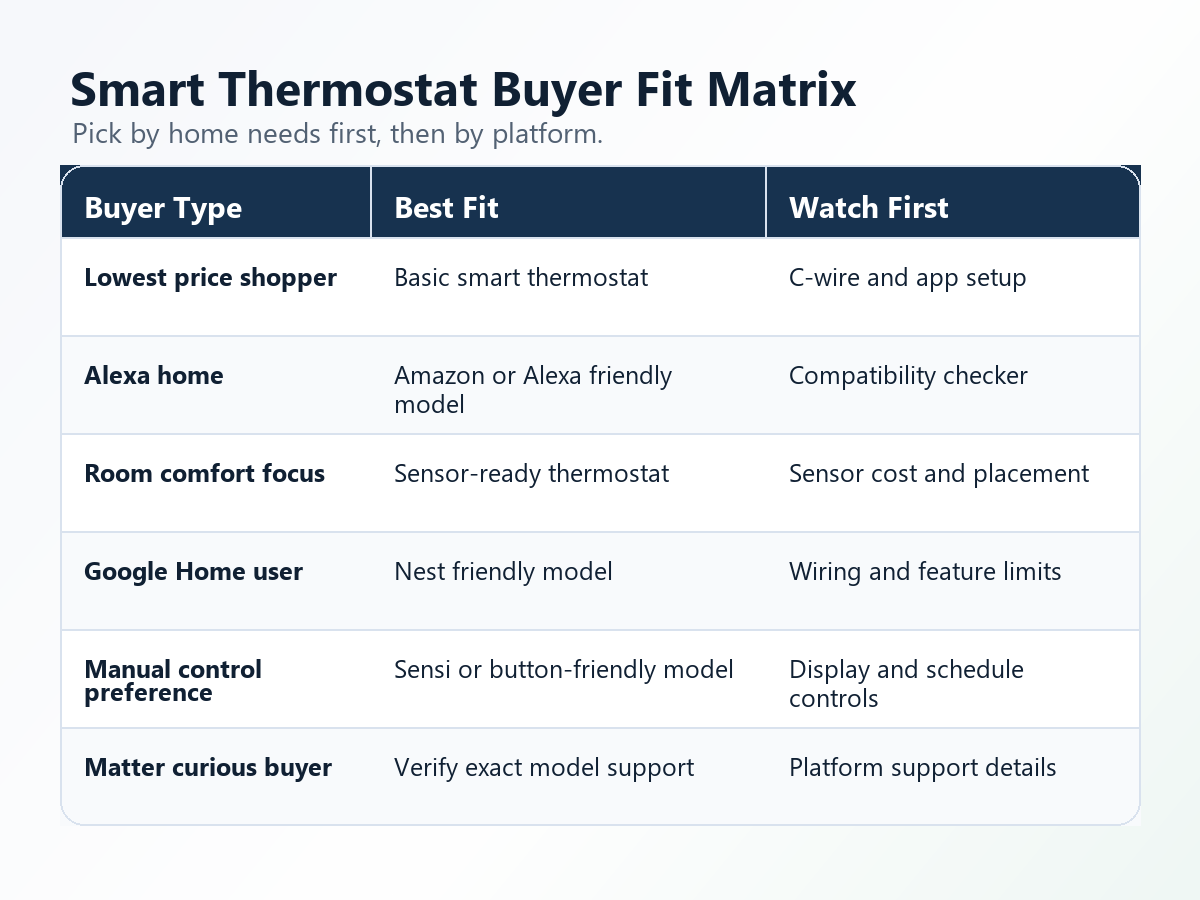
What matters before you buy a smart thermostat
1. Your wiring and C-wire situation
A C wire, or common wire, gives a thermostat steady power. Some smart thermostats can work without one in many homes, but that does not mean every no-C-wire installation is clean. Heat pumps, heat-only systems, cool-only systems, zones, and older systems can change the answer. If this is your main issue, use the separate smart thermostat without a C-wire checklist before choosing a model.
2. HVAC compatibility
Smart thermostat compatibility is about the heating and cooling system first. Most products in this guide are meant for compatible 24 V HVAC systems, not 120/240 V electric baseboard or other line-voltage setups. For broader context, start with the Energy Automation page.
3. App setup and family control
The thermostat might be easy for the person who installed it and irritating for everyone else. Check household sharing, manual controls, schedules, guest access, and whether people in the home are comfortable using the app.
4. Room sensors and uneven temperatures
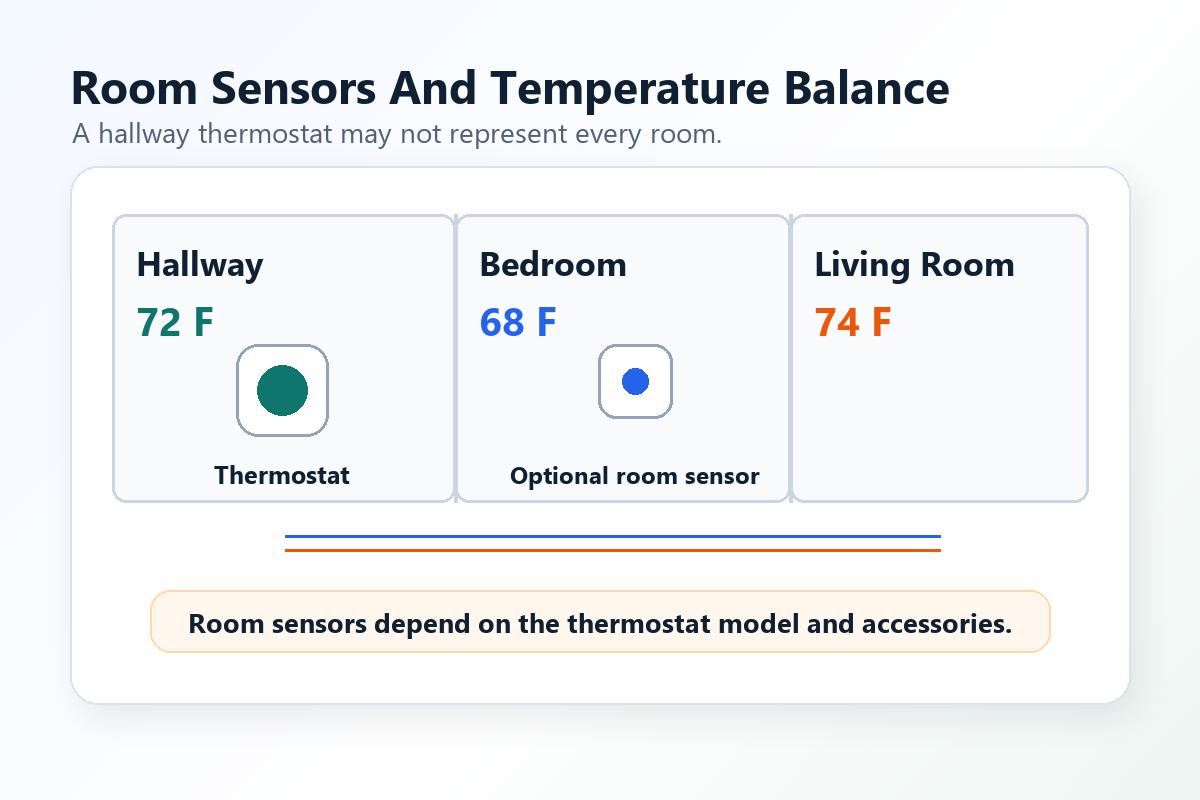
A room sensor matters when the thermostat is in a hallway but the bedroom gets too hot at night. If every room already feels balanced, a premium sensor ecosystem may be more thermostat than you need.
5. Voice assistants and platform lock-in
Alexa, Google Home, Apple Home, Matter, and SmartThings support can be useful, but platform support does not prove HVAC compatibility. Run the thermostat maker’s compatibility checker first, then compare ecosystems with the Alexa vs Google Home beginner guide and Matter, Thread, and Zigbee guide.
6. Manual controls when the app is annoying
Physical buttons and clear wall controls still matter. A thermostat that looks less futuristic can be better for a household where not everyone wants to open an app to change the temperature.
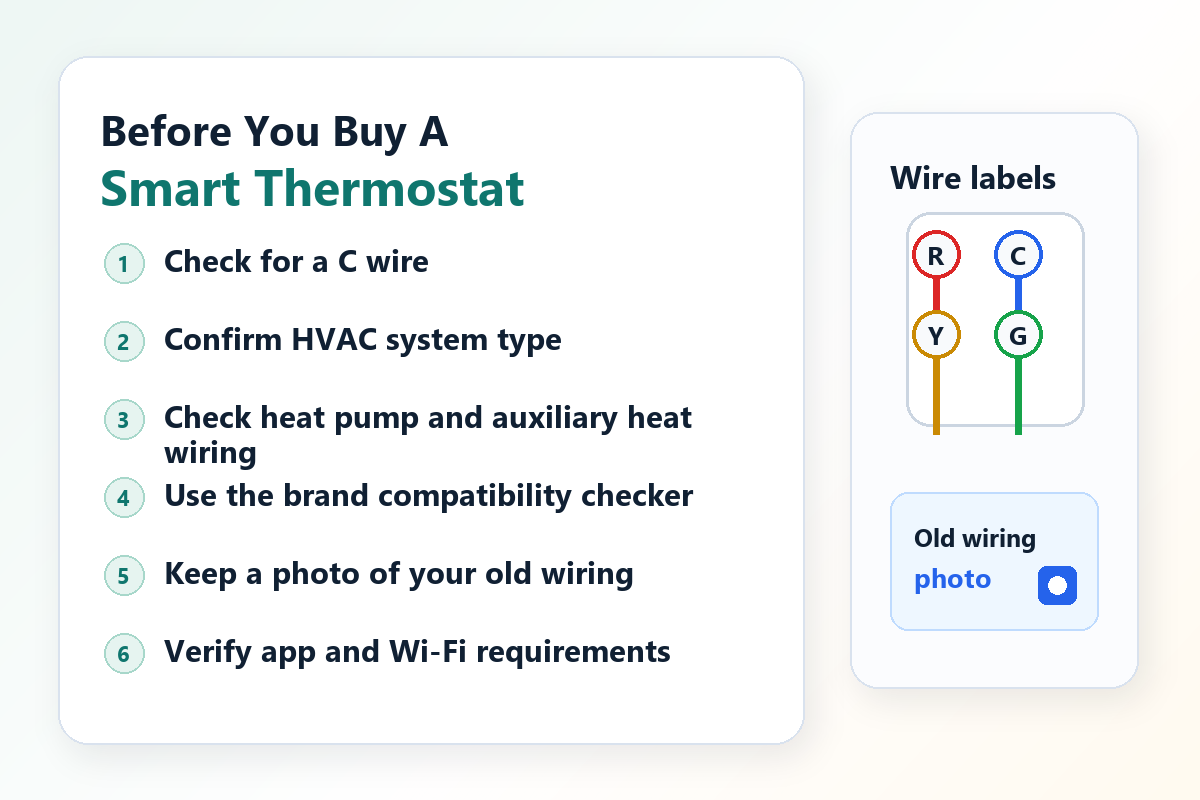
Safety note: Do not guess on thermostat wiring. Turn off HVAC power before removing a thermostat cover or touching wires, photograph the existing wiring, use terminal labels rather than wire colors, and call an HVAC professional if voltage, heat pump wiring, dual fuel, zone controls, or wire labels are unclear.
In-depth smart thermostat reviews
ecobee Smart Thermostat Premium
Verdict: Best overall comfort pick for homes where room temperature imbalance is the real problem.
Best for: homeowners who want room sensing, a premium touchscreen, broad assistant support, and a more complete comfort system.
Skip it if: you only need basic app scheduling or do not want sensor setup, PEK decisions, and a more feature-heavy thermostat.
ecobee Premium makes the most sense when your thermostat location does not represent the rooms people actually use. If the hallway is comfortable but the bedroom runs warm at night, the included SmartSensor is the feature that can justify choosing Premium over a simpler model.
C-wire and compatibility note: ecobee says the Power Extender Kit can help compatible systems that lack a C wire, but the PEK is not a universal adapter. It is for supported 24 VAC systems and has compatibility limits.
Install friction: the compatibility checker matters. If PEK installation is required, the project can involve the HVAC control board, not just the thermostat wall plate.
Daily-use note: strongest in this group for room-sensor comfort, touchscreen control, and households that want Alexa, Google Assistant, Apple Home, or SmartThings support in one thermostat ecosystem. Optional ecobee Smart Security features may require a subscription, and Siri voice control requires compatible Apple home hardware.
Comparison line: choose ecobee Premium over Nest when room imbalance matters more than having the simplest Google-first thermostat.
Check before buying: ecobee compatibility checker, C wire or PEK path, heat pump wiring, Apple/Siri hub requirements, and whether optional ecobee services matter to you.
Source checked: official ecobee Smart Thermostat Premium product page, ecobee compatibility checker, and ecobee Power Extender Kit guidance, last checked July 1, 2026.
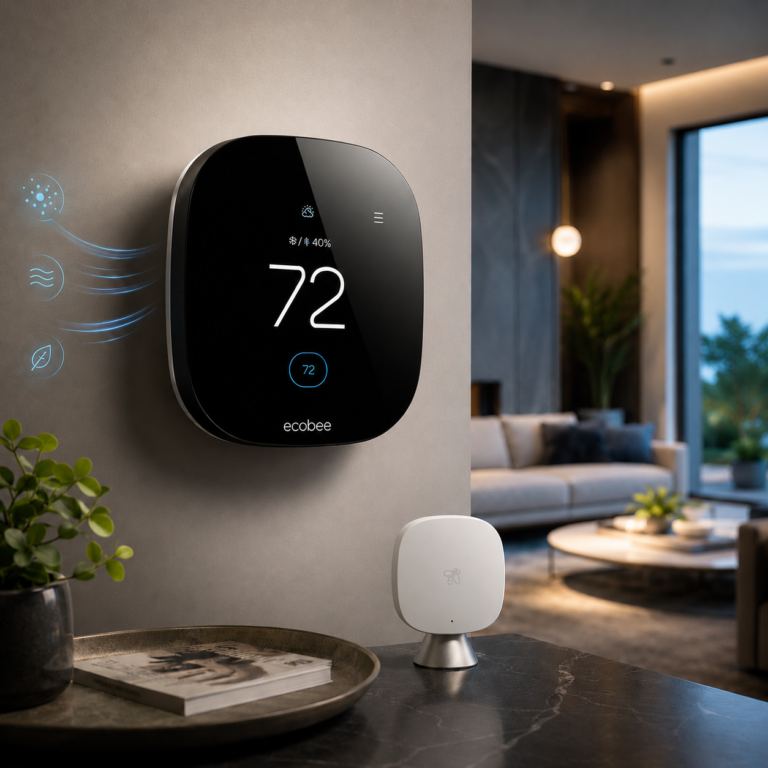
ecobee Smart Thermostat Premium
Premium ecobee thermostat with SmartSensor, air quality alerts, and broad assistant support.
- Good fit: Homes that want room sensing, premium controls, and wider smart home compatibility.
- Watch out for: Siri requires an Apple home hub, and compatibility should be checked before buying.
As an Amazon Associate I earn from qualifying purchases.
Google Nest Thermostat
Verdict: Best Google/Home option for buyers who want a clean thermostat and can verify wiring first.
Best for: Google Home users who want app control, schedules, away behavior, and a simple modern thermostat.
Skip it if: you want included room sensors, a large touchscreen, or you are buying an older used Nest model without checking current support.
The Nest Thermostat is the cleanest pick here for a Google-centered home. The ownership risk is assuming “Nest” means your wiring is automatically fine. It does not. Google’s compatibility checker and C-wire guidance should come before the product comparison.
C-wire and compatibility note: Google says Nest thermostats work with many 24 V systems, but some systems need a C wire or Nest Power Connector. Some Nest setups can work without a C wire, but not every HVAC system will be stable without one. High-voltage 120/240 V systems, often tied to electric baseboard heat, are not compatible.
Install friction: wire labels matter more than wire colors. Heat pump, dual-fuel, dual-transformer, and other complex systems can require extra care or professional help.
Daily-use note: good for app-first control, schedules, and Google Home users who do not need a room-sensor-heavy comfort setup.
Comparison line: choose Nest over Amazon if your home is built around Google Home rather than Alexa; choose ecobee Premium over Nest if room sensors are the main reason you are upgrading.
Check before buying: Google compatibility checker, C-wire or Power Connector need, exact model/generation, app support, and Wi-Fi reliability at the thermostat.
Source checked: official Google Nest Thermostat specs, Google Nest compatibility guidance, and Google Nest C-wire and Power Connector guidance, last checked July 1, 2026.
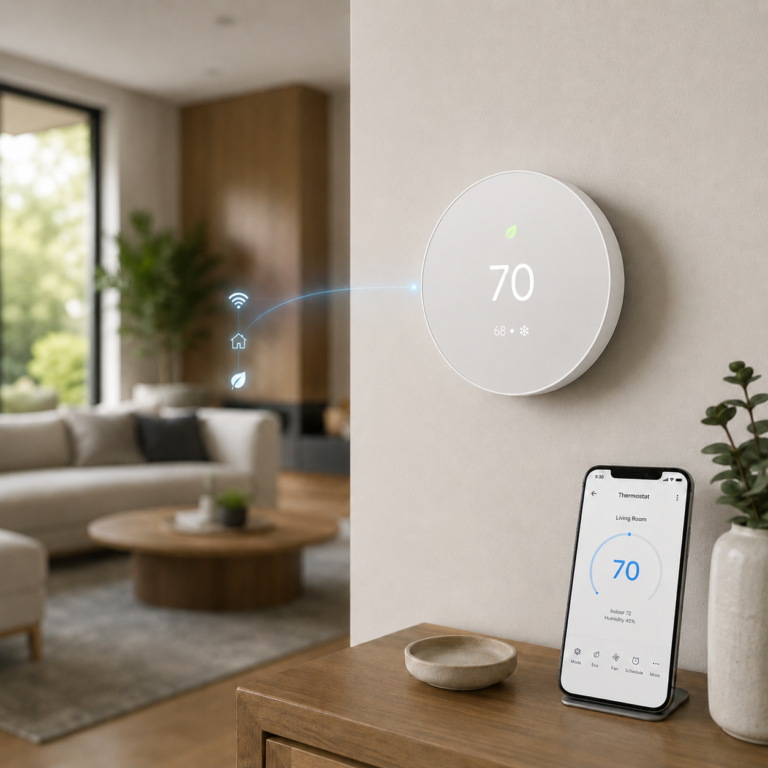
Google Nest Thermostat - Snow
Simple Google Home thermostat with app control, schedules, and HVAC monitoring alerts.
- Good fit: Google Home users who want a clean thermostat with remote control.
- Watch out for: Some HVAC systems may need a C-wire or compatible power accessory.
As an Amazon Associate I earn from qualifying purchases.
Amazon Smart Thermostat
Verdict: Best Alexa-focused option for compatible homes that want simple app control.
Best for: Alexa or Ring households that want a straightforward thermostat controlled through the Alexa app.
Skip it if: you do not want Alexa setup, need 5 GHz Wi-Fi, or want to avoid C-wire and adapter questions entirely.
The Amazon Smart Thermostat is not complicated because it is Alexa-focused. The risky part is buying it before confirming how your HVAC system will power it. Treat the compatibility check as the product’s first feature.
C-wire and compatibility note: Amazon’s product information says the thermostat needs C-wire power or a compatible power adapter kit. It works with many 24 V HVAC systems and is not for 110-240 V HVAC systems such as electric baseboard heat.
Install friction: if the C terminal is empty, you need the correct power path before the thermostat can work. It also uses 2.4 GHz Wi-Fi.
Daily-use note: it has no built-in speaker or microphone, so voice control depends on a compatible Alexa-enabled device or the Alexa app. It is not the best fit if Apple Home, Google Home-first control, or advanced mixed-platform automation is the main goal.
Comparison line: choose Amazon over Nest if Alexa is already the center of your smart home; choose Nest if Google Home is.
Check before buying: Amazon compatibility check, C-wire or adapter path, 2.4 GHz Wi-Fi, Alexa account setup, and whether everyone in the home is comfortable with Alexa app control.
Source checked: official Amazon Smart Thermostat product information and Amazon Smart Thermostat support guidance, last checked July 1, 2026.
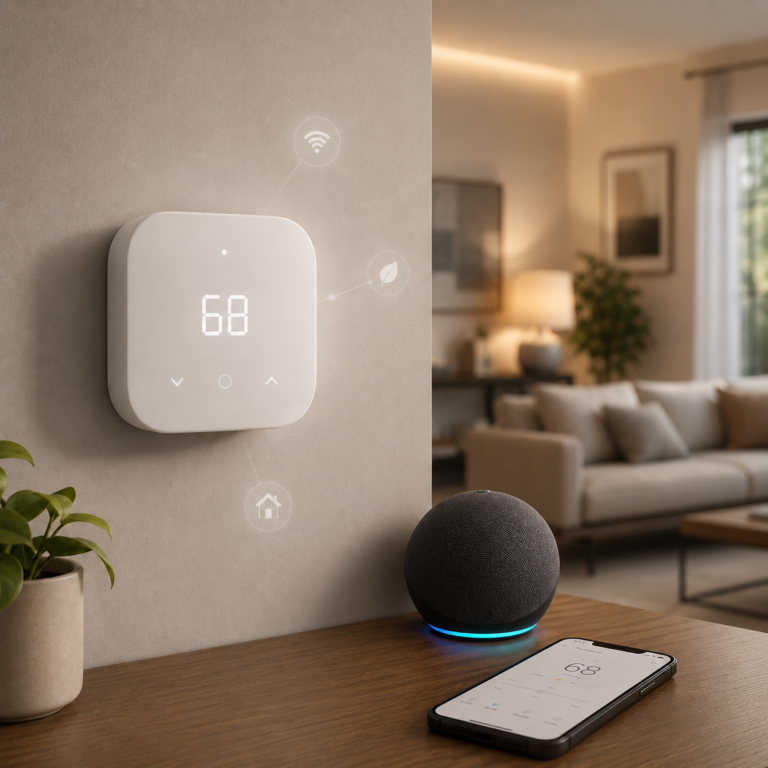
Amazon Smart Thermostat
Alexa-focused smart thermostat with app schedules, Ring support, and guided setup.
- Good fit: Alexa or Ring households that already have compatible HVAC wiring.
- Watch out for: Requires C-wire power or a separate adapter kit, and it uses 2.4 GHz WiFi.
As an Amazon Associate I earn from qualifying purchases.
Emerson Sensi Wi-Fi Smart Thermostat ST55
Verdict: Best physical-button option for people who want smart control without giving up a familiar thermostat layout.
Best for: DIY-minded buyers and households where physical wall controls matter as much as app control.
Skip it if: you want a premium color touchscreen, room sensors, or a no-C-wire promise for every system type.
Sensi ST55 is the thermostat to look at when the rest of the household does not want a smart home project on the wall. The physical buttons are not a step backward if they make the thermostat easier for everyone to use.
C-wire and compatibility note: Sensi says the ST55 does not need a C wire for most conventional heating and cooling systems, but heat-only, cool-only, heat pump, and zone systems require a common wire. Line-voltage, millivolt, proprietary/communicating, and RV/camper 12 VDC systems are not compatible.
Install friction: no-C-wire wording has exceptions. Check your system type before relying on it.
Daily-use note: strongest here for familiar manual control, 2.4 GHz Wi-Fi app access, schedules, and broad platform support without a full touchscreen design.
Comparison line: choose Sensi over Honeywell if physical-button simplicity matters more than a large color touchscreen.
Check before buying: Sensi compatibility guidance, C-wire exceptions, heat pump status, 2.4 GHz Wi-Fi, and whether the simple wall display fits your household.
Source checked: official Sensi Wi-Fi Thermostat product page and Sensi HVAC compatibility guidance, last checked July 1, 2026.
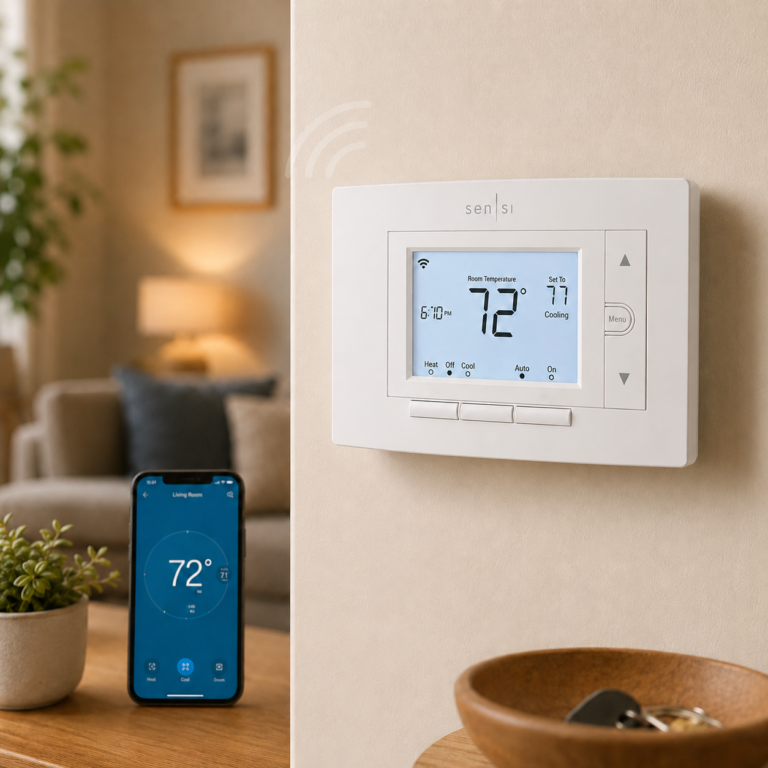
Emerson Sensi Wi-Fi Smart Thermostat ST55
Traditional-looking smart thermostat with app control, usage reports, and physical buttons.
- Good fit: DIY users who want smart controls without a full touchscreen design.
- Watch out for: C-wire is not required in most applications, but compatibility still needs to be checked.
As an Amazon Associate I earn from qualifying purchases.
Honeywell Home RTH9585WF1004 Smart Color Thermostat
Verdict: Best touchscreen/scheduling option for compatible C-wire homes.
Best for: buyers who want a visible wall touchscreen, 7-day scheduling, holds, and a more traditional thermostat feel.
Skip it if: you do not have a C wire, have line-voltage electric baseboard heat, or want the most modern sensor ecosystem.
Honeywell is the choice for someone who wants the thermostat itself to remain a strong control surface. If your household likes seeing schedules and changes on the wall, it may be a better fit than a minimalist app-first thermostat.
C-wire and compatibility note: the official quick-start documentation says a C wire is required and powers the thermostat. It is designed for common 24 V systems and does not work with millivolt or 120/240 V systems.
Install friction: this is not a product to buy and hope your missing C wire works out. Confirm the C wire before buying.
Daily-use note: strong for on-wall scheduling, touchscreen control, app access, and households that want visible controls.
Comparison line: choose Honeywell over Sensi if a color touchscreen matters more than traditional physical buttons.
Check before buying: C wire, 24 V HVAC support, heat pump staging, Total Connect Comfort app support, and 2.4 GHz Wi-Fi.
Source checked: official Honeywell Home RTH9585WF1004 product page and Resideo/Honeywell quick-start wiring documentation, last checked July 1, 2026.
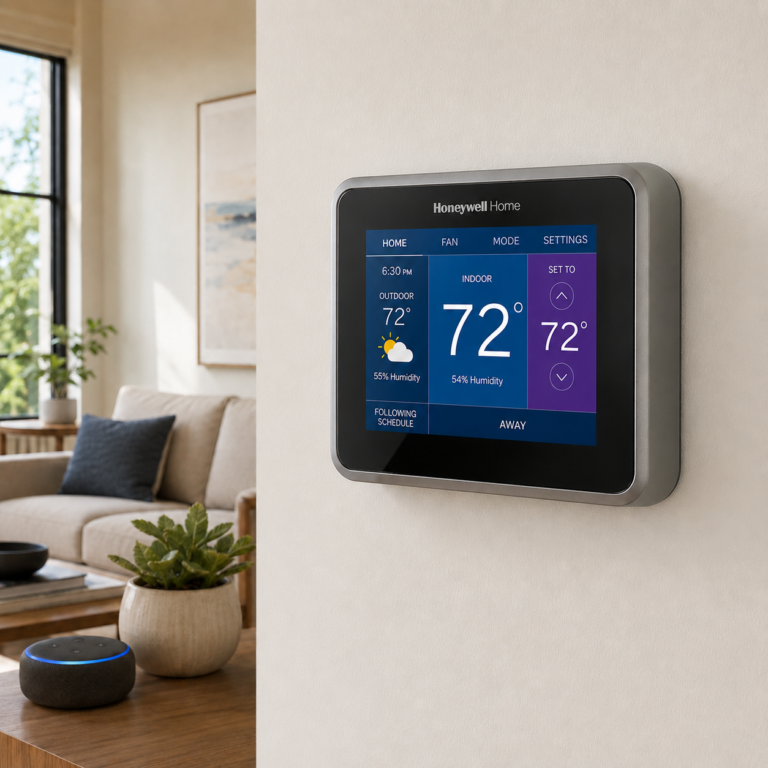
Honeywell Home RTH9585WF1004 Smart Color Thermostat
Color touchscreen thermostat with 7-day programming, app control, and weather display.
- Good fit: Homes that want a visible wall display and traditional Honeywell controls.
- Watch out for: C-wire is required, and electric baseboard heat is not supported.
As an Amazon Associate I earn from qualifying purchases.
ecobee Smart Thermostat Essential
Verdict: Best lower-feature ecobee option when you want the ecobee app experience without Premium’s full hardware package.
Best for: buyers who want ecobee basics, app control, touchscreen control, and major assistant support.
Skip it if: uneven rooms are the main reason you are upgrading or you need Premium’s included SmartSensor and PEK path.
ecobee Essential is the sensible ecobee comparison point when Premium feels like more thermostat than you need. The catch is that “lower-feature” can also mean you need to check accessories more carefully.
C-wire and compatibility note: check ecobee compatibility before buying. The local product record notes that a C wire or separately purchased PEK may be needed, and the PEK is only for supported systems.
Install friction: Essential can be the simpler ecobee choice only if your wiring and accessory needs are simple too.
Daily-use note: a good ecobee app and touchscreen option when you do not need an included SmartSensor or built-in air quality hardware.
Comparison line: choose Essential over Premium if you want ecobee basics; choose Premium if room sensors and the included setup hardware matter.
Check before buying: C-wire/PEK need, trim kit need, SmartSensor expectations, platform setup, and total accessory requirements.
Source checked: official ecobee Smart Thermostat Essential product page, ecobee compatibility checker, and ecobee Power Extender Kit guidance, last checked July 1, 2026.
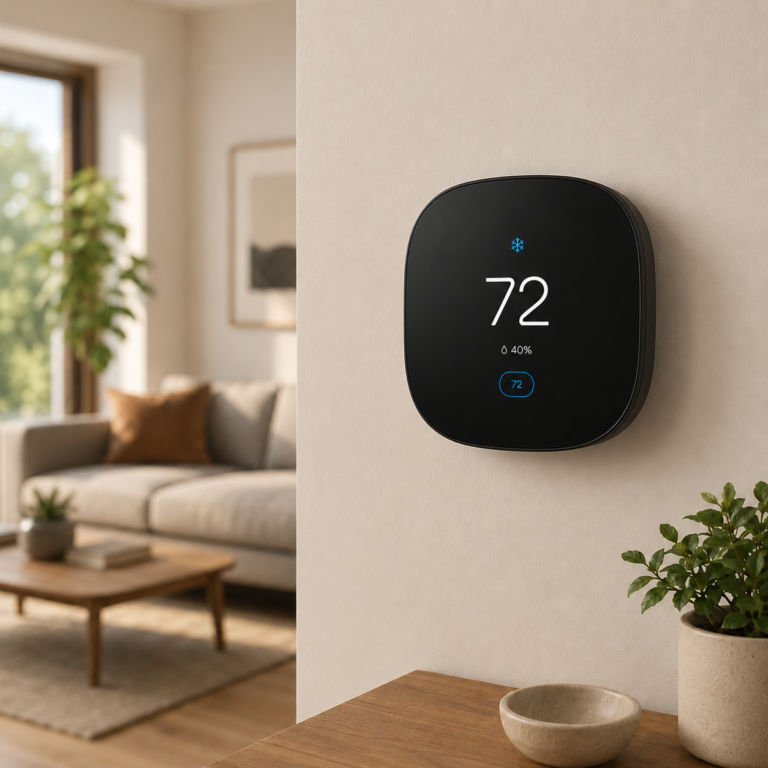
ecobee Smart Thermostat Essential
Entry-level ecobee thermostat with app control, touchscreen control, and assistant support.
- Good fit: Buyers who want ecobee basics without the Premium model’s extra hardware.
- Watch out for: SmartSensor, PEK, and Trim Kit are sold separately.
As an Amazon Associate I earn from qualifying purchases.
Aqara Smart Thermostat W200
Verdict: Best Matter/Apple-forward option if current compatibility checks clearly pass.
Best for: advanced smart home buyers building around Aqara, Apple Home, Matter, or cross-platform automations.
Skip it if: you want the safest mainstream thermostat path with the clearest official support trail.
Aqara is the most interesting platform-forward thermostat in this comparison, but it is also the one to handle most cautiously. Matter and Apple Home interest should not come before HVAC compatibility, power requirements, region support, and hub/setup details.
C-wire and compatibility note: Aqara’s official W200 product page and compatibility checker support treating it as a thermostat hub with specific HVAC and adapter requirements. Do not treat that as universal compatibility. Confirm your exact system, C-wire or adapter path, region, Matter setup, and Aqara app requirements before buying.
Install friction: expect more pre-buy homework than with the more established mainstream thermostat ecosystems.
Daily-use note: best suited to buyers who already know how they want Matter, Apple Home, Aqara, Alexa, or Google Home to fit together.
Comparison line: choose Aqara over ecobee only if platform-forward automation matters more than the most mature room-comfort thermostat path.
Check before buying: current Aqara product/support documentation, HVAC compatibility, power wiring, region support, Matter controller requirements, app setup, and backup manual control.
Source checked: official Aqara Thermostat Hub W200 product page, Aqara compatibility checker, and Aqara support links from the official product page, last checked July 1, 2026.
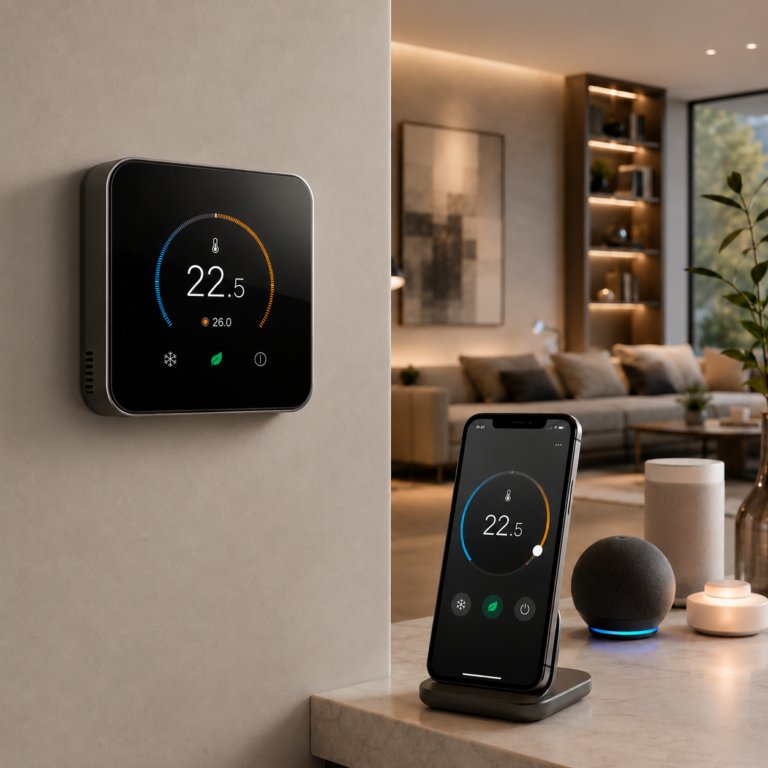
Aqara Smart Thermostat W200
The Aqara Smart Thermostat W200 is a touchscreen thermostat for smart homes that use Apple Home, Matter, and major voice assistants. It is best treated as a compatibility-first thermostat upgrade because HVAC wiring and system support must be confirmed before purchase.
- Good fit: Best for someone building around Apple Home or Matter who wants a touchscreen thermostat with broader smart home control features.
- Watch out for: HVAC compatibility must be checked before purchase.
As an Amazon Associate I earn from qualifying purchases.
Other smart thermostats we considered
ecobee Comfort and Security Bundle
This overlaps heavily with ecobee Premium, then adds door/window sensors and optional security-service questions. It is better for a future comfort-plus-security guide than the main thermostat ranking here.
Google Nest Learning Thermostat 4th Gen
The local inventory includes it, but the newer learning model deserves a separate verification pass for current compatibility, included sensor behavior, Matter setup, and C-wire edge cases before it replaces the simpler Nest pick.
Sensi Touch 2
It is worth comparing if you want a Sensi touchscreen, but it overlaps with the ST55 audience while adding different wiring and accessory expectations. The ST55 is the clearer physical-button recommendation.
Honeywell Home X-series models
Newer Honeywell/Resideo models may be better future picks, but they were not added as product cards because this article only uses products verified in the current AIHA product-card scope.
Line-voltage electric baseboard thermostats
Mysa and other line-voltage thermostat categories were considered only to explain the boundary. Most thermostats in this guide are low-voltage HVAC products, so baseboard heat belongs in a dedicated line-voltage guide.
Ecobee vs Nest vs Amazon vs Sensi: which one should you buy?
Choose ecobee Premium if room comfort is the real problem. It is the strongest choice here when a hallway thermostat does not reflect bedrooms, upstairs rooms, or workspaces.
Choose Nest if you are a Google Home household and want a clean app-first thermostat without building a sensor ecosystem around it.
Choose Amazon Smart Thermostat if Alexa is already the center of your home and you are comfortable confirming C-wire power or the supported adapter path before purchase.
Choose Sensi ST55 if other people in the house still want a familiar thermostat with physical buttons and you want smart features without a premium touchscreen.
Choose Honeywell if a color touchscreen and visible scheduling matter more than smart-home platform novelty.
Choose ecobee Essential if ecobee’s app and thermostat design appeal to you but you do not need Premium’s included sensor package.
Choose Aqara W200 only after extra verification if Matter, Apple Home, Aqara, and automation-forward control are the real reason you are shopping.
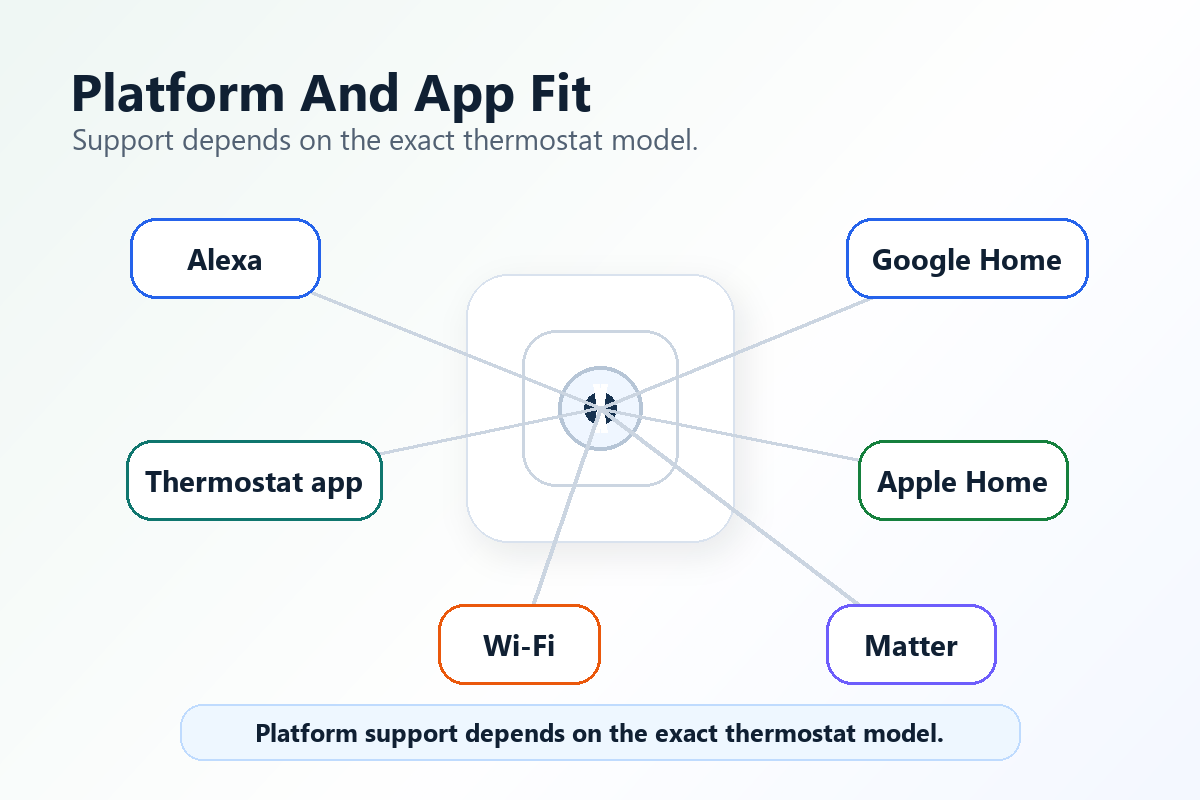
C-wire, compatibility, and installation mistakes to avoid
- Do not buy by brand first. Buy by HVAC compatibility first, then ecosystem.
- Do not trust wire colors alone. Use terminal labels and the brand’s compatibility checker.
- Do not ignore line voltage. If your old thermostat controls 120/240 V electric baseboard heat, most smart thermostats in this guide are the wrong category.
- Do not assume no-C-wire claims cover heat pumps. Heat pump, heat-only, cool-only, and zone systems often change the wiring answer.
- Do not forget the rest of the household. A thermostat everyone can use is better than a smarter thermostat only one person understands.
- Do not skip Wi-Fi checks. A thermostat in a weak Wi-Fi spot can make remote control and alerts unreliable.
- Do not treat energy savings as guaranteed. Smart thermostats can help manage schedules and reduce waste, but savings depend on home, HVAC system, climate, settings, and behavior.
Which smart thermostat fits your home?
If your bedroom is always wrong
Start with ecobee Premium. Room sensors are more relevant than voice control when the thermostat is in the wrong place.
If you live in Google Home
Start with Nest, then verify wiring and power. Do not assume older Nest models have the same app support as current models.
If Alexa runs the house
Start with Amazon Smart Thermostat if your HVAC system can power it cleanly and you are fine using the Alexa app.
If app-only controls annoy people
Start with Sensi ST55 or Honeywell. The wall interface matters when multiple people adjust the temperature.
If the C wire is missing
Do not pick a winner yet. First use the exact manufacturer’s compatibility checker and confirm whether your system supports a power connector, PEK, adapter, or no-C-wire setup.
If Matter is the reason
Be extra careful. Matter support does not settle HVAC compatibility, power, sensor behavior, or app account setup.
FAQ
Can I install a smart thermostat myself?
Many smart thermostats are designed for guided DIY installation, but only if your wiring and HVAC system are clear. Turn off HVAC power, photograph the old wiring, follow the manufacturer’s compatibility checker, and call an HVAC professional if you see unclear labels, high voltage, heat pump confusion, dual fuel, zone controls, or anything that does not match the guide.
What is the best smart thermostat for most homes?
For comfort-focused homes, ecobee Smart Thermostat Premium is the strongest overall pick because room sensors can solve a real problem that basic app control cannot. For Google-first homes, start with Nest. For Alexa-first homes, start with Amazon Smart Thermostat. In every case, the best choice is the one that passes the compatibility checker for your HVAC system.
Do smart thermostats need a C wire?
Some do, some do not, and some only avoid a C wire in certain systems. Honeywell RTH9585WF1004 requires a C wire. Amazon Smart Thermostat requires C-wire power or a compatible adapter path. Nest and Sensi can work without a C wire in many situations, but system type matters. ecobee may use a Power Extender Kit on supported systems.
What happens if my thermostat has no C wire?
Do not pick a thermostat by brand yet. First identify your HVAC type and wire terminals, then run the exact manufacturer’s compatibility checker. Depending on the model and system, you may need a power connector, PEK, adapter kit, unused wire, new C wire, or a professional installer.
Which smart thermostat works best without a C wire?
Sensi ST55 and Google Nest Thermostat are common starting points for no-C-wire research, but neither should be treated as universal. Heat pump, heat-only, cool-only, zone, and other system types can change the answer. Run the exact compatibility checker before buying.
Do smart thermostats work with heat pumps?
Some smart thermostats support heat pumps, but heat pump wiring is where labels and compatibility checkers matter most. Check auxiliary heat, emergency heat, O/B reversing valve labels, staging, C-wire needs, and any dual-fuel setup before buying.
Do smart thermostats work with electric baseboard heat?
Most thermostats in this guide are not for 120 V or 240 V electric baseboard heat. If your old thermostat controls line-voltage baseboard, fan-forced, or wall heat, look for a thermostat made for that system type and consider a qualified installer.
What happens if Wi-Fi goes out?
Do not assume every model behaves the same. Many thermostats can still control HVAC locally at the wall, but remote control, voice assistants, app alerts, automations, weather features, and energy reports may stop until Wi-Fi returns. Check the exact product’s offline behavior before relying on it.
Which smart thermostat is best for renters?
Renters should get written permission before replacing a thermostat and should keep the original thermostat and wiring notes. If replacement is allowed, favor a model with clear manual controls, reversible installation, and compatibility that passes without special HVAC work.
Is ecobee better than Nest?
ecobee Premium is better if room sensors and uneven temperatures are the reason you are upgrading. Nest is better if you want a cleaner Google Home thermostat and do not need a room-sensor-heavy setup. The better product depends on your wiring and your daily comfort problem.
Is the Amazon Smart Thermostat worth it?
It can make sense for Alexa households with compatible 24 V HVAC wiring and a clear C-wire or adapter path. Skip it if you do not want Alexa app setup, need 5 GHz Wi-Fi, or want a thermostat that avoids C-wire questions.
Which smart thermostat works best with Alexa?
Amazon Smart Thermostat is the most direct Alexa-first option in this comparison. ecobee Premium is also a strong option if you want room sensors and broader platform support. Choose by HVAC compatibility first, then Alexa features.
Which smart thermostat works best with Google Home?
Google Nest Thermostat is the cleanest Google/Home option. ecobee and Sensi can also fit Google Assistant or Google Home households depending on setup, but Nest is the obvious starting point for buyers already using Google Home.
Which smart thermostat works best with Apple HomeKit?
ecobee Premium is a strong Apple Home option, with Siri access requiring compatible Apple home hardware. Aqara W200 is the most Matter/Apple-forward option in this comparison if current official compatibility checks pass. Nest and other products may have Matter or platform-specific paths that should be verified for the exact model.
Are smart thermostat room sensors worth it?
They are worth it when the thermostat is in a hallway or room that does not represent where people spend time. If the main bedroom, nursery, office, or upstairs room is always wrong, a room-sensor thermostat can be more useful than a basic app thermostat. If your house already feels balanced, sensors may not be the feature to pay attention to first.
What should I check before replacing my old thermostat?
Check the voltage, wire terminal labels, C wire, heat pump or auxiliary heat wiring, HVAC system type, compatibility checker result, app account, Wi-Fi signal, wall plate size, household access, and whether you need a professional installer. Renters should also get permission before replacing a thermostat.
Official sources used for compatibility checks
Compatibility and feature claims in this guide were checked against official or manufacturer-controlled sources wherever available, including Google Nest compatibility guidance, Amazon Smart Thermostat product information, ecobee compatibility guidance, ecobee Power Extender Kit documentation, Honeywell Home product documentation, Sensi compatibility support, and Aqara W200 official product documentation. The research file for this revision records source links, verified facts, and remaining cautions by product.